Leave Your Message
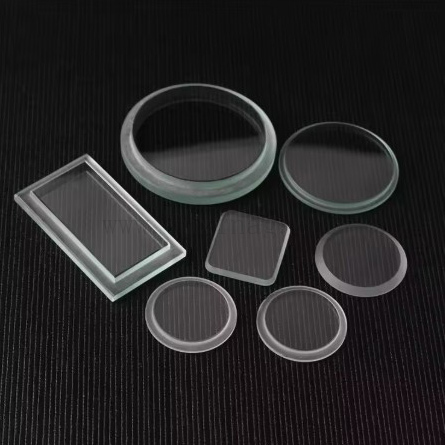
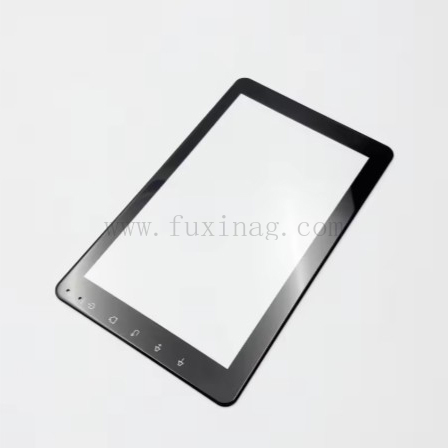
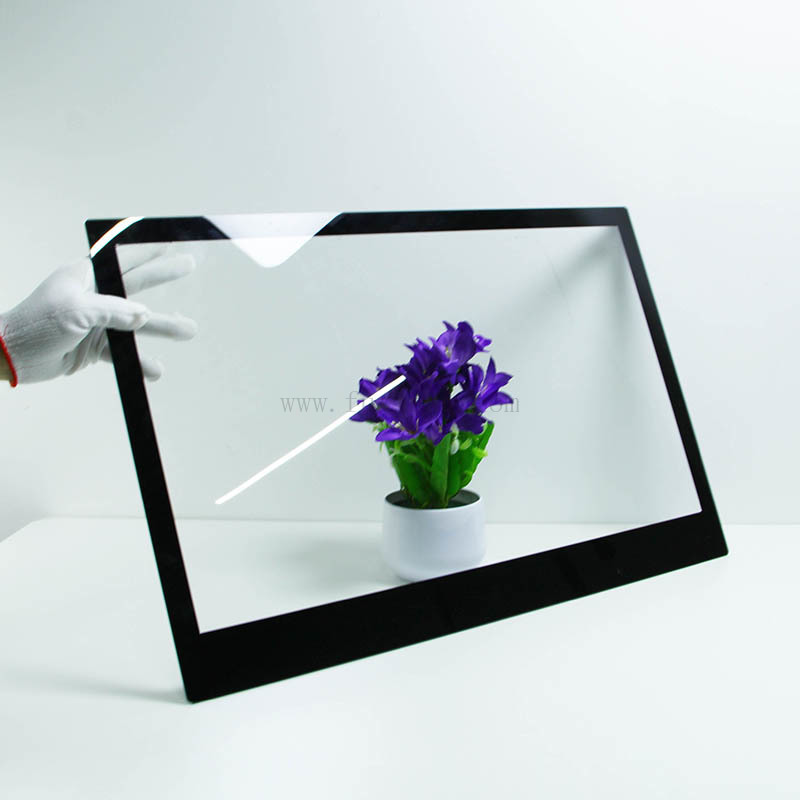
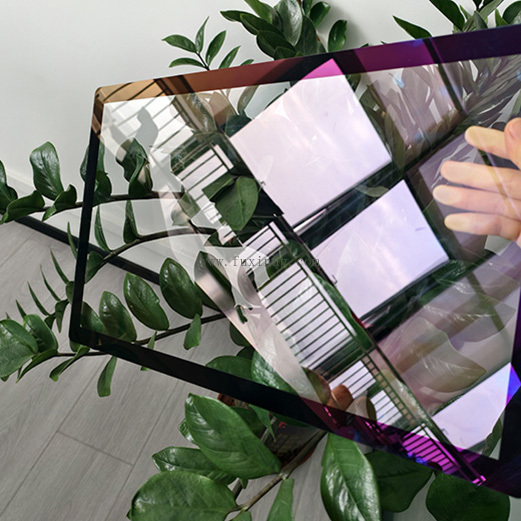
Precision-engineered optical glass combining chemical AG etching, multilayer AR coating, and hydrophobic AF deposition for maritime touch consoles.
Navigating extreme maritime environments through the integration of cutting-edge optical glass processing.
Eliminates 99% of mirror reflections, delivering high-contrast ECDIS vector maps and crisp radar plots under direct 100,000 lux solar illumination.
Vacuum-deposited oleophobic layers resist sea-spray crusting, fingerprint smudges, moisture condensation, and corrosive saline environments.
Chemically or thermally tempered to achieve IK08–IK10 impact resistance, compliant with IEC 60945 and DNV maritime type-approval standards.
How microscopic surface texturing, multilayer magnetron sputtering, and nano-hydrophobic layers operate in unison.
Unlike inexpensive spray-on coatings that cause pixel sparkle and wear off over time, chemical acid etching creates a permanent, uniform nanoscale textured topography directly into the float or aluminosilicate substrate. This structure scatters incoming ambient specular light into diffuse omnidirectional reflections, reducing mirror-like reflections to under 1.5%. By carefully tuning gloss levels between 60° (35 to 95 GU) and controlling surface roughness (Ra 0.15–0.35 µm), the panel prevents visual fatigue without degrading ultra-high-definition chart resolution or inducing visual distortion.
Standard float glass naturally reflects approximately 8% to 10% of visible light at ambient air-glass boundaries. In maritime environments, this causes significant transmission loss and back-scatter. Using vacuum magnetron reactive sputtering, alternating dielectric metal oxide layers (such as Silicon Dioxide and Niobium/Titanium Dioxide) are deposited at exact quarter-wavelength thicknesses. Destructive optical wave interference eliminates residual reflections across the 380–780nm spectrum, elevating total light transmittance up to an astonishing 97% to 98.5%. This allows lower backlight power consumption, reduced thermal generation in sealed IP67 bridge consoles, and extended LCD operational lifespan.
Operating in harsh marine environments subjects bridge displays to continuous exposure to airborne salt particles, moisture droplets, and frequent tactile interaction by navigators wearing damp gloves or operating with oily hands. The plasma co-evaporated fluoropolymer top layer creates an ultra-low surface energy boundary (water contact angle > 115° and oil contact angle > 65°). Salt particles cannot adhere to the microscopically smooth fluorinated matrix, moisture beads roll off immediately without leaving opaque mineral residue, and touch gestures remain ultra-smooth with low friction coefficient (< 0.05), maintaining seamless glove-touch and multi-touch operation.
Tailored optical glass performance across key navigation consoles and marine command centers.
Electronic chart navigation requires continuous, high-fidelity color distinction (e.g., distinguishing depth contours, shallow water shoals, and maritime safety fairways according to IHO S-52 standards). Combined AG AR AF glass prevents optical chromatic shifts, eliminates blinding daylight glare on 24-inch to 55-inch large format chart tables, and provides full night-dimming compatibility without internal backlighting reflections.
In congested sea lanes and severe weather conditions (typhoons, dense fog), radar operators track micro-targets and high-speed vessel trajectories. The unmatched 98% light transmission and crisp etched AG properties ensure that tiny radar echoes and target tags remain razor-sharp without pixel blur or sparkling interference.
Offshore drillships, subsea construction vessels, and OSVs require pinpoint joystick and touch-display precision during multi-hour station keeping. The oleophobic AF coating guarantees ultra-smooth, zero-latency fingertip gliding, completely preventing salt crusting or moisture from misinterpreting touch commands.
As autonomous commercial vessels advance, high-definition situational awareness feeds are transmitted to remote shore stations and ruggedized outdoor deck control terminals. AG/AR/AF glass panels ensure uninterrupted clarity across extreme outdoor ambient lighting and direct UV solar exposure.
Leading global OEM/ODM manufacturer specializing in high-end optical deep-processing and customized cover glass.
Founded in 2012, registered capital $1.5 million & 21000+m² plant, Fuxin Glass is an ODM/OEM provider for glass deep-processing service over 13 years, accumulating rich industry experience. We process base glass into customized cover glass with AG/AR/AF/AM surface coating and silk screen printing for touch screen, smart control devices, home appliances, lighting, and other special optical applications. Our factory is near the beautiful Wanlv Lake, Heyuan City, China. The factory boasts a comprehensive suite of precision glass processing equipment, including glass tempering lines, fully automatic CNC cutting and edging lines, a large-scale screen printing line, linear and custom-shaped edging machines, and AG, AF, AR, and Anti-bacterial glass spraying. Leveraging a strong R&D and sales team, production capacity, and a stable supply chain, Fuxin Glass has grown to become one of China's top 3 electronic and electrical cover glass manufacturers and enjoys a global reputation. We maintain stable partnerships with many renowned global brands, including TCL, HKC, CVTE, OKV, HUAWEI, KONKA, SEEWO. The company has a team of over 50 leading professional technical personnel. Based on the enterprising thinking of building a business with integrity, creating a new future, technological creativity and leading by science and technology, we are constantly innovating. We always adhere to the principle of "integrity, quality and win-win" and are willing to establish good long-term cooperative relationships with customers all over the world!
Fuxin Glass will give you quality and service that goes far beyond anyone else
Our factory has 13-year of OEM/ODM experience.
ISO, RHOS, GS, JIS Z certificate.
24-hours Professional after-sale service.
Specializing in the research, design, production, and sale of electronic display glass.
Fuxin Glass owning a leading R&D team which combines of a total of 50
Top 3 A-share listed electronic display glass manufacturer in China.
Professional manufacturer of AG glass, AM glass, AR glass, AF glass, and various electrical glass.
Our Customers: continuous cooperation over decades with the well known customers, including TCL, BOE, CVTE, Hisense, HKC, HUAWEI and etc.
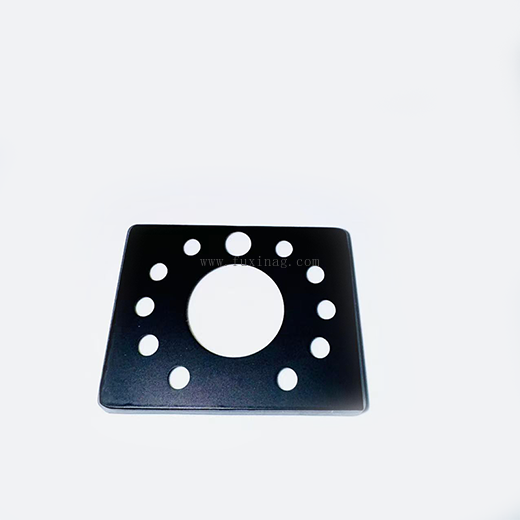
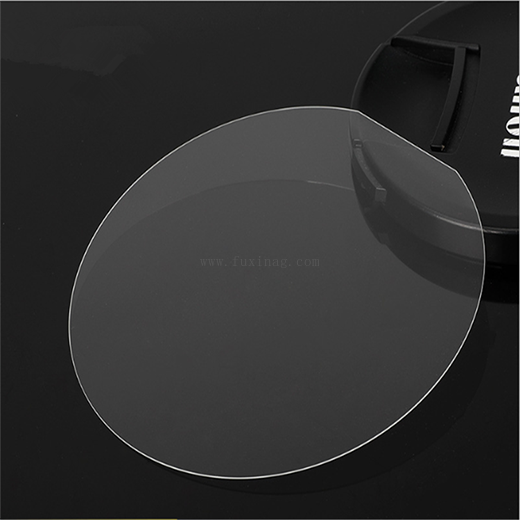
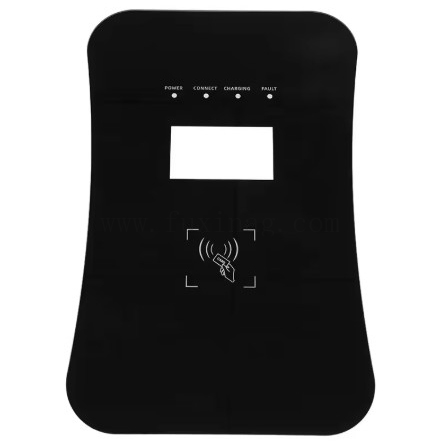
Explore our full line of custom-engineered tempered glass panels with AG, AR, AF, and screen-printing technologies.