inquiry
Leave Your Message

China Top Pre Cut Glass Manufacturers for Global Buyers

China has become a major sourcing base for Pre Cut Glass used in windows, doors, façades, furniture, and interior partitions. Its manufacturers serve projects ranging from residential renovations to large commercial developments. Yet factory scale alone does not guarantee dependable results.

As fenestration expert Dr. Helen Sanders has said, “High-performance glass is only as good as the whole window system.” That principle also applies to Pre Cut Glass. Accurate measurements, edge quality, coating compatibility, packaging, and installation conditions all influence final performance. A buyer should examine more than product photographs and attractive prices. Factory certifications, quality-control records, cutting tolerances, sample approval, and export experience deserve equal attention.

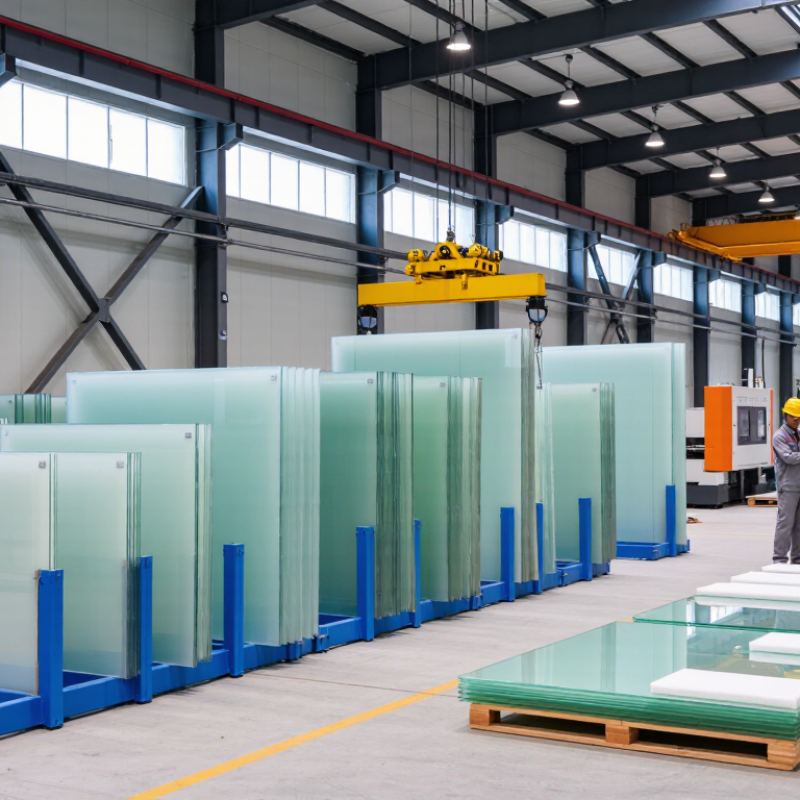
The best manufacturers usually provide detailed drawings before production. They confirm thickness, glass type, edge treatment, hole positions, and protective packaging. A well-packed shipment should separate each pane with suitable interlayers or spacers. Cracked corners tell a different story.

This guide examines leading Chinese Pre Cut Glass manufacturers for global buyers. It considers production capability, customization, inspection procedures, communication, lead times, and after-sales support. These factors can expose strengths that a polished website cannot show.

No supplier is perfect. Even experienced factories may face remaking delays, unclear drawings, or transport damage. Buyers must remain involved. A small measurement error can become an expensive installation problem. The following overview offers a practical starting point, not a substitute for technical verification and project-specific testing.
China Top Pre Cut Glass Manufacturers for Global Buyers

What Pre-Cut Glass Means in Global Manufacturing

Pre-cut glass means sheets are cut to specified dimensions before reaching the final assembly line. In global manufacturing, this changes glass from raw material into a ready-to-install component. A buyer may request panels for doors, display cases, partitions, or machinery guards. Each piece can include drilled holes, rounded corners, polished edges, or shaped notches. That sounds simple. It is not.

Reliable pre-cut production begins with a controlled technical drawing. The document should state length, width, thickness, tolerance, edge treatment, hole diameter, and corner radius. For example, a 600-millimeter panel may require a tolerance of plus or minus one millimeter. Even that small difference can affect frame fitting. Small errors multiply. Experienced manufacturers check dimensions during cutting and inspect finished edges under proper lighting. They also use protective films, separators, and strong export packaging to reduce scratching and breakage during long-distance transport.

Global buyers should ask for sample approval, inspection records, and clear replacement procedures. Tempered, laminated, coated, and low-iron glass require different handling methods. Material selection must match temperature changes, impact exposure, and installation conditions. A well-cut panel is not automatically a safe panel. No process is flawless. Drawings can contain overlooked details, and packaging can fail under unusual handling. Practical communication remains essential. Confirm measurements again before mass production, especially when several suppliers or factories share the same project.

How to Evaluate China’s Pre-Cut Glass Manufacturers

Evaluating China’s pre-cut glass manufacturers starts with evidence, not polished photos. From factory reviews, I ask for production records, inspection reports, and recent project references. A reliable supplier should explain glass thickness, cutting tolerance, edge treatment, and packaging methods clearly. Ask whether measurements are checked before and after tempering. The answer matters.

Request a sample batch before placing a large order. Measure length, width, diagonals, and hole positions with calibrated tools. Inspect chipped edges, scratches, optical distortion, and uneven polishing under bright light. For laminated or tempered glass, request test documents from a recognized laboratory. Confirm whether the documents match the actual factory and product specification. Mistakes happen. A supplier’s response to a failed sample reveals more than a sales presentation. I once saw a minor corner deviation delay installation because the buyer had not defined acceptable tolerance.

Factory capability also depends on traceability and communication. Ask how each crate is labeled, including size, quantity, glass type, and destination. Strong suppliers can identify the production date and inspection record for every batch. Check whether wooden crates use moisture protection and internal separators. Request photos before loading, but do not rely on photos alone. A video call during production can reveal storage conditions, cutting equipment, and housekeeping. Confirm lead times in writing, including rework procedures and replacement responsibility. Even experienced buyers can overlook these details when prices seem attractive. Reliable evaluation requires patience, measurable standards, and a willingness to question convenient answers.

China Top Pre Cut Glass Manufacturers for Global Buyers - How to Evaluate China’s Pre-Cut Glass Manufacturers

Evaluation Dimension Practical Benchmark Evidence to Request Why It Matters to Global Buyers Suggested Rating
Product Scope Clear, tinted, low-iron, coated, laminated, insulated, tempered, and patterned glass options, subject to actual production capability. Current product catalogue, sample list, processing-equipment list, and recent project references with confidential details removed. A broader in-house capability can reduce outsourcing, handling, lead-time, and quality risks. High / Medium / Low
Pre-Cut Accuracy Require a documented dimensional tolerance agreed on the purchase order; common project tolerances are often around ±1 to ±2 mm, depending on size, thickness, edgework, and application. Inspection report showing measured length, width, diagonals, hole locations, notches, and cut-outs from an actual production batch. Accurate pre-cutting reduces installation adjustment, site waste, and rework. Pass / Conditional / Fail
Available Thicknesses Common architectural thicknesses include approximately 3–19 mm, while exact availability depends on glass type, size, processing route, and safety requirements. Thickness range, thickness-tolerance records, and samples measured with calibrated equipment. Matching the specified thickness is essential for structural performance, glazing compatibility, and compliance. Complete / Partial
Safety-Glass Compliance For relevant products, verify compliance with applicable standards such as EN 12150 for thermally toughened glass, EN 14449 for laminated glass, ASTM C1048 for heat-treated flat glass, or local equivalents. Valid test reports, declarations of conformity, factory quality records, and product markings where required. Correct standards documentation supports approval by architects, inspectors, authorities, and end customers. Verified / Unverified
Edgework and Fabrication Capability should cover at least the required edge finish, drilling, polishing, notches, cut-outs, and corner treatment before tempering or final assembly where applicable. Technical drawings, edgework samples, process flow, and dimensional inspection records. Fabrication errors are difficult and costly to correct after heat treatment or shipment. Excellent / Adequate / Limited
Quality Management A documented quality-management system, commonly supported by ISO 9001 certification or equivalent controlled procedures, with traceable inspection records. Certificate scope and validity, inspection plan, nonconformance procedure, calibration records, and corrective-action examples. Consistent procedures are more reliable than visual claims made during sales discussions. Strong / Basic / Missing
Optical and Visual Quality No unacceptable scratches, chips, bubbles, inclusions, roller-wave distortion, coating defects, or visible contamination under the agreed inspection conditions. Pre-shipment inspection criteria, defect photographs, lighting conditions, acceptance limits, and sample approval records. Visual defects can affect appearance, safety perception, and acceptance at installation sites. Acceptable / Review / Reject
Sample and Approval Process Supplier provides samples or a first-article batch for approval before mass production, with drawings, tolerances, glass build-up, and surface requirements confirmed in writing. Signed sample-approval form, approved drawings, colour or coating references, and change-control procedure. Written approval prevents misunderstandings about dimensions, colour, thickness, and processing details. Controlled / Informal
Packaging and Shipment Protection Use strong export crates or cases, separators, edge protection, moisture control where needed, load securing, and clear identification of each glass piece or bundle. Packaging specification, loading photographs, crate material details, moisture precautions, and damage-claim procedure. Proper packaging helps prevent edge damage, breakage, corrosion of fittings, and confusion during unloading. Export-Ready / Needs Improvement
Lead-Time Reliability Lead time should be quoted by product type and order quantity; require a production schedule rather than relying on a single general estimate. Historical on-time delivery data, production plan, capacity allocation, holiday schedule, and escalation contact. Reliable delivery is critical when glass must meet fixed installation or construction milestones. Reliable / Variable / Unknown
Commercial and After-Sales Support Quotation should define Incoterms, minimum order quantity, payment terms, inspection rights, replacement policy, documentation, and responsibility for transit damage. Complete quotation, sales contract, warranty terms, claim-response procedure, export documents, and communication records. Clear commercial terms reduce disputes and provide a practical remedy when quality or logistics problems occur. Transparent / Partial / Unclear

Note: Benchmarks should be confirmed against the destination country’s building codes, applicable product standards, project drawings, and the final purchase specification.

Key Glass Products, Processing Methods, and Custom Options

China’s pre-cut glass manufacturers supply panels for doors, windows, partitions, furniture, shower enclosures, and display cases. Common options include clear, low-iron, tinted, frosted, laminated, tempered, and insulated glass. Each product serves a different practical need. Clear glass supports visibility, while laminated glass improves impact resistance and sound control.

Processing quality begins with accurate digital cutting and careful edge treatment. Manufacturers may use CNC cutting, waterjet cutting, drilling, polishing, beveling, and screen printing. Tempering strengthens glass through controlled heating and rapid cooling. Lamination joins glass sheets with an interlayer, reducing dangerous fragments after breakage. Insulated units use sealed air spaces for better thermal performance.

Details matter.

Global buyers can request rounded corners, notches, holes, special shapes, matte surfaces, colors, and printed patterns. A reliable supplier should confirm drawings, tolerances, thickness, packaging, and inspection methods before production. Experienced teams often provide samples or small trial orders, which can expose design problems early. A first sample is rarely perfect. That is useful feedback, not failure. Buyers should check edge quality, dimensions, surface marks, flatness, and protective packaging. Factory photographs alone cannot prove consistency. Clear inspection records and direct technical communication offer stronger evidence of dependable production.

China Pre-Cut Glass Products: Typical Thickness Ranges

Representative thickness ranges commonly available for architectural pre-cut glass. Manufacturers can customize dimensions, edgework, holes, cut-outs, coatings, colors, and safety treatments according to project requirements.

Tempered and heat-strengthened glass are commonly processed for safety and strength, while laminated glass is selected for impact resistance and noise control. Insulated glass units combine multiple panes with an air or gas cavity to improve thermal performance. Actual ranges depend on panel size, processing standards, and custom fabrication requirements.

Quality Standards, Certifications, and Production Capabilities

China’s leading pre-cut glass manufacturers compete through documented quality, not attractive catalogues alone. The UNEP Global Status Report for Buildings and Construction 2023 attributes 37% of global energy-related emissions to buildings and construction. This raises demand for low-emissivity, laminated, and insulated glass with verified thermal performance.

Reliable factories usually operate ISO 9001 quality systems and may hold ISO 14001 environmental or ISO 45001 safety certification. Certification matters, but scope matters more. Buyers should request current certificates, laboratory reports, and traceable batch records. For tempered glass, EN 12150 or ASTM C1048 compliance supports product evaluation. Laminated products should reference EN 14449 or equivalent testing. Heat-soaked glass may follow EN 14179-1.

Production capability should be checked on the shop floor. CNC cutting, edge polishing, drilling, and digital measurement reduce errors in tight architectural tolerances. Strong suppliers use barcode tracking from sheet loading to final packing. They also inspect optical distortion, edge quality, dimensions, and breakage patterns. According to the International Energy Agency’s Buildings report, improving building efficiency remains central to reducing energy demand. Therefore, manufacturers should provide U-values, visible transmittance, and solar-factor data, not vague “energy-saving” claims. One weakness remains common: some suppliers show certificates but cannot connect them to each shipment. Global buyers should audit that gap before signing. The paperwork can look perfect. The glass still needs testing.

Ordering, Export Logistics, and Supplier Communication Steps

China Top Pre Cut Glass Manufacturers for Global Buyers

Ordering pre-cut glass from China starts with a controlled specification, not a quick price request. Send CAD or dimensioned drawings with length, width, thickness, corner radius, hole positions, and edge finish. State whether the glass is annealed, tempered, laminated, or insulated. Include tolerance limits, packing preferences, and the final installation environment. Small details matter. A supplier should confirm every drawing revision in writing before production begins. Ask for a sample or marked-up drawing when geometry is complex.

For export logistics, agree on Incoterms, port responsibility, insurance, and document ownership before payment. Confirm crate dimensions and gross weight, because oversized packaging can change freight costs sharply. Use reinforced wooden cases, corner protection, separators, and moisture control for long sea routes. Request photos before loading, then match crate numbers against the packing list. Glass can arrive intact. It may still be the wrong glass. Independent inspection or a factory video check can verify dimensions, labels, surface quality, and quantity.

Supplier communication works best through one approved specification sheet and one responsible contact. Record production dates, inspection points, loading deadlines, and responses to technical questions. Ask how replacements will be handled if breakage or dimensional errors occur. Do not rely on verbal promises hidden in fast chat messages. I have seen projects delayed by one unconfirmed hole location. That mistake was avoidable, but it changed the review process. Each revision should carry a date, approval name, and file number.