China Top High Reflective Glass Manufacturers and Applications Guide?
High Reflective Glass has become increasingly important in various industries. It offers exceptional thermal properties and energy efficiency. Renowned expert Dr. Emily Chen, an authority in architectural glass technology, states, "High Reflective Glass transforms the way we design energy-efficient buildings."
Manufacturers in China are at the forefront of this innovation. They leverage advanced technology to enhance the reflective quality of glass. The applications range from commercial buildings to residential projects. These products improve light management while reducing heat absorption. However, not all manufacturers meet the highest standards.
The industry faces challenges in balancing aesthetics and functionality. Some products may compromise on performance for visual appeal. It is crucial to evaluate the reliability of suppliers. High Reflective Glass provides numerous advantages, yet careful consideration is required.
Overview of High Reflective Glass Manufacturing in China
High reflective glass is a key material in modern construction, especially in China. Its production involves complex processes that require specialized knowledge and technology. China has developed a strong manufacturing sector for this type of glass. Numerous facilities focus on improving efficiency and quality, yet challenges remain. Some manufacturers struggle with consistency in reflective properties, which can affect end-use applications.
The applications of high reflective glass are diverse. It's widely used in buildings for energy efficiency. It reflects sunlight, reducing heat absorption and cutting down air conditioning costs. This application is crucial, especially in regions with intense sunlight. In vehicle manufacturing, high reflective glass enhances aesthetic appeal while providing thermal comfort. However, some products may not meet international standards, leading to safety concerns. Ongoing investments and innovations are needed to overcome these barriers and improve overall product reliability.
Key Players in the Chinese High Reflective Glass Industry
The Chinese high reflective glass industry plays a crucial role in various sectors, including architecture and automotive manufacturing. In recent years, the demand for high reflective glass has surged. Reports indicate an expected growth rate of over 5% annually. This growth is propelled by increasing energy efficiency requirements in buildings and the automotive sector's shift toward lightweight materials.
Several key players dominate this market. They emphasize innovation in production techniques and sustainability. Advanced manufacturing technologies, such as chemical vapor deposition, have enhanced quality and performance. These firms leverage extensive research and development to improve product durability and reflectivity. Their commitment to environmentally friendly practices is notable, yet challenges remain regarding raw material sourcing and recycling processes.
Furthermore, while the market shows promise, it faces some obstacles. Competition among manufacturers can lead to price wars, affecting profitability. Additionally, fluctuating raw material costs can disrupt supply chains. Most companies are aware of these pitfalls but often struggle with strategic planning to mitigate risks. To thrive, a balance between innovation and cost management is essential in this evolving landscape.
China Top High Reflective Glass Manufacturers and Applications Guide
| Manufacturer Type |
Production Capacity (tons/year) |
Key Applications |
Main Markets |
Quality Certification |
| Flat Glass Manufacturers |
200,000 |
Architecture, Solar Energy |
Domestic, Export |
ISO 9001, CE |
| Coated Glass Manufacturers |
150,000 |
Automotive, Electronics |
Asia, Europe |
ISO 14001, AS/NZS |
| Laminated Glass Manufacturers |
120,000 |
Construction, Safety |
North America, Middle East |
SGS, ASTM |
| Mirrored Glass Manufacturers |
100,000 |
Interior Design, Furniture |
Global |
ISO 9001, CE |
Applications of High Reflective Glass Across Various Sectors
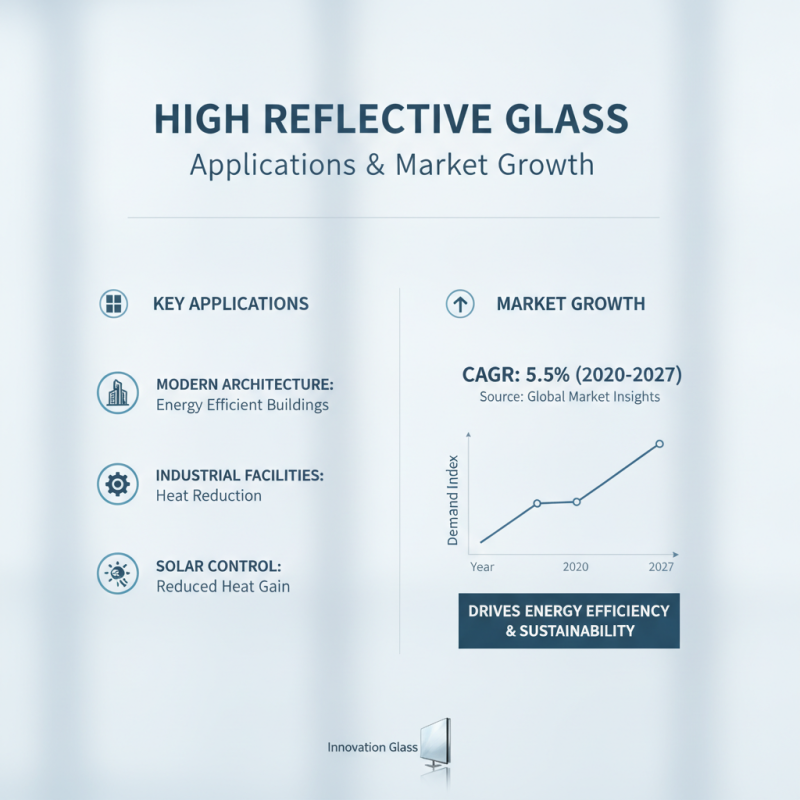
High reflective glass plays a crucial role in modern architecture and industrial applications. Its ability to reflect sunlight significantly reduces heat gain, contributing to energy efficiency. According to a report by Global Market Insights, the demand for high reflective glass is projected to grow at a compound annual growth rate (CAGR) of 5.5% through 2027. This growth reflects its increasing adoption across various industries.
In the construction sector, high reflective glass is commonly used in skyscrapers and commercial buildings. A study by the U.S. Department of Energy noted that buildings utilizing reflective glass can decrease cooling costs by up to 30%. This type of glass is also essential in automotive applications. It enhances visibility while protecting interiors from UV rays. The automotive industry accounted for approximately 25% of the high reflective glass market in 2022, indicating its widespread use.
However, challenges remain. The production of high reflective glass must balance quality and cost. Variations in manufacturing techniques can lead to inconsistencies in reflection levels. Additionally, there are concerns about the glass's environmental impact during the production process. Industry experts suggest focusing on sustainable practices to mitigate these issues. As demand rises, addressing these challenges will be vital for manufacturers to maintain their competitive edge.
Technological Innovations in High Reflective Glass Production
High reflective glass is transforming various industries through innovative production techniques. Manufacturers are focusing on enhancing the properties of glass to ensure better light management and durability. New coating technologies are enabling high reflectivity while maintaining transparency. This is crucial for architectural applications in both residential and commercial spaces.
The process of creating high reflective glass often involves multiple stages. One notable aspect is the precision during material application. Even slight variances can lead to significant performance changes. Enhanced quality control measures have become vital. They ensure that each batch meets specific requirements without compromising on performance.
Some challenges remain in the market. The balance between cost and quality continues to be a topic for discussion. Producers must weigh the benefits of advanced technologies against financial feasibility. Nevertheless, these technological advancements are paving the way for more efficient glass production methods. As the industry evolves, continuous reflection on these processes will drive further innovations.
Market Trends and Future Outlook for High Reflective Glass in China
The high reflective glass market in China is evolving rapidly. Recent reports indicate that the market is projected to reach USD 3 billion by 2025, growing at an average rate of 8%. This growth is attributed to increased demand across various sectors, including architecture and automotive. Efficient energy use is a major focus, with high reflective glass playing a crucial role in reducing heat absorption in buildings.
Applications of high reflective glass are expanding, with a notable rise in green buildings. The integration of this glass type enhances energy efficiency, thus lowering operational costs. Architectural firms are increasingly favoring this glass for its aesthetics and functionality. However, challenges persist, such as fluctuating raw material prices and the need for advanced manufacturing technologies. Companies must adapt to these market pressures to remain competitive.
Future outlooks suggest that innovation will drive the sector forward. Key trends include the development of smart glass technologies and enhanced durability features. There is a noticeable shift towards sustainable practices as environmental regulations tighten. Manufacturers are urged to invest in research and development to align with these trends, ensuring they meet both consumer expectations and regulatory standards.