Leave Your Message
Engineered anti-glare, anti-reflective, and high-durability cover glass systems specifically customized for ship control interfaces
Analyzing the pivotal evolution of high-clarity maritime optical human-machine interfaces
In modern naval architecture and commercial maritime engineering, the ship navigation bridge serves as the centralized nervous system of the entire vessel. Navigators, helmsmen, and officers of the watch (OOW) rely continuously on electronic visual consoles, including Electronic Chart Display and Information Systems (ECDIS), Radar/Automatic Radar Plotting Aids (ARPA), Conning Displays, Dynamic Positioning (DP) systems, and Integrated Bridge Systems (IBS). As these displays transition to ultra-high-definition 4K LCD panels with multi-touch projected capacitive (PCAP) sensors, the demand for high-grade Anti-Glare (AG) cover glass for LCD for ship navigation bridge displays has surged to historic heights.
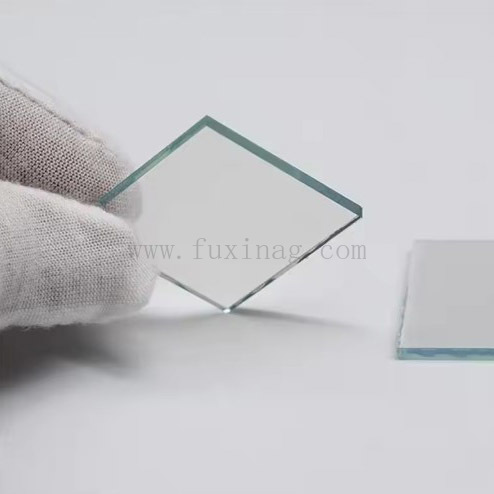
Marine wheelhouses present some of the most unforgiving optical environments in the industrial display sector. Ship bridge displays are exposed simultaneously to intense ambient direct sunlight during daytime transits, extreme oblique solar reflections bouncing off vast open water surfaces, severe temperature gradients, pervasive airborne saltwater mist, and stringent requirements for ultra-low luminance night operations under Night Vision Goggle (NVG) lighting. Standard display cover glass exhibits a specular reflection rate exceeding 4.5% to 8%, which turns the navigation screen into a reflective mirror under high daylight, causing dangerous blind spots and visual fatigue. Chemical-etched AG cover glass fundamentally eliminates specular reflections by scattering incident ambient light into diffuse reflections, maintaining screen contrast, legibility, and navigational safety across all maritime operational conditions.
Micro-etched surfaces disperse up to 98% of harsh direct and ocean-reflected specular glares without washing out LCD contrast.
Resistant to 96+ hours of neutral salt spray corrosion, thermal shocks (-30°C to +85°C), and continuous tropical humidity.
Chemically strengthened aluminosilicate and thermally tempered soda-lime glass withstands high mechanical shock and vibration.
Precision manufacturing parameters ensuring zero sparkling on high-PPI marine navigation panels
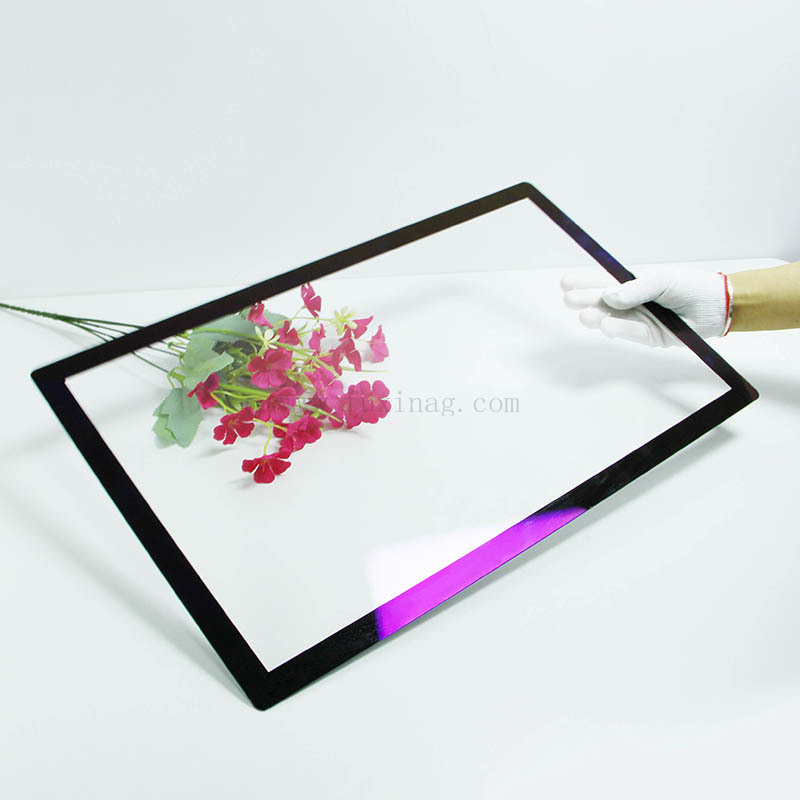
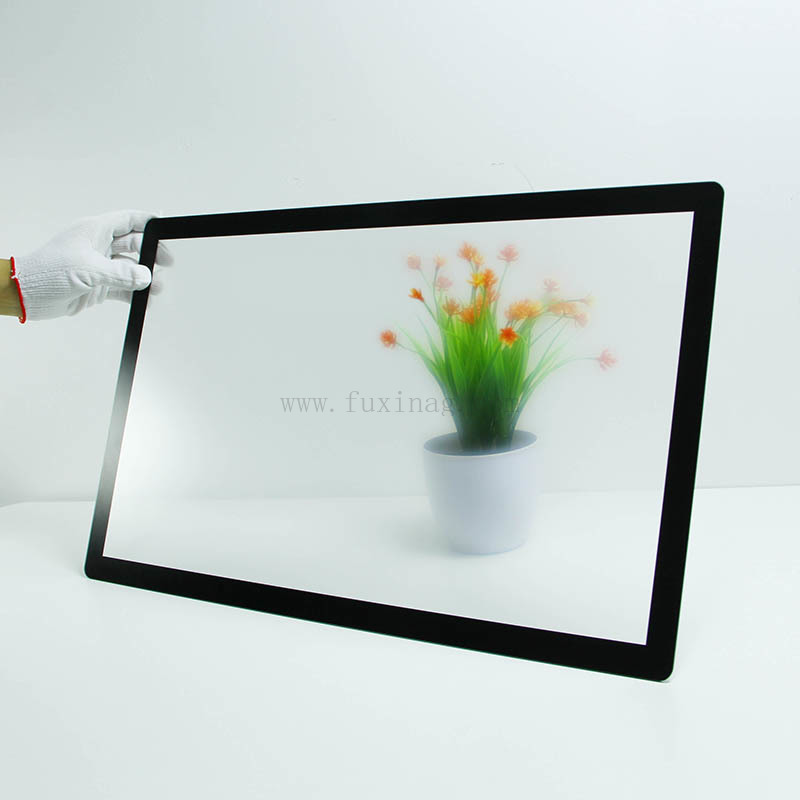
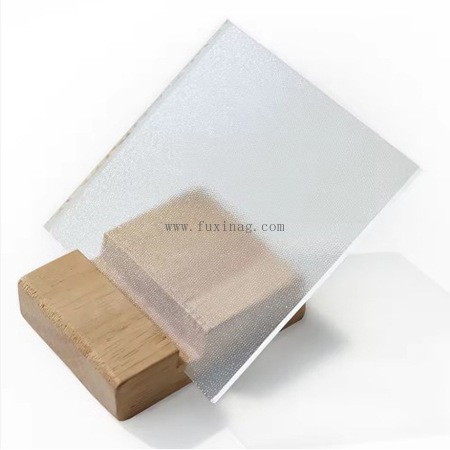
A crucial technical dilemma in specifying AG cover glass for LCD for ship navigation bridge displays lies in selecting between chemical etching AG and physical spray-coating AG. In maritime navigation, chemical etching is unconditionally recognized as the gold standard. Chemical etching involves submerging high-purity glass substrates into specialized acid etching baths, creating permanent, isotropic nano-to-microscale concave particle structures directly on the glass surface. Unlike spray coatings that can peel, delaminate, or scratch under repetitive cleaning with saline-contaminated wiping cloths, etched AG glass becomes part of the glass matrix itself, offering infinite service life with identical chemical resistance to base glass.
Furthermore, chemical-etched AG glass can be meticulously tuned for specific Gloss Units (GU) ranging from 35 GU to 95 GU and Haze levels between 3% and 15%. This precise control prevents the "sparkle phenomenon" (pixel shimmering) when bonded to high-pixel-density marine LCD panels (exceeding 200 PPI), ensuring that intricate nautical chart vectors, bathymetric contour lines, radar tracks, and AIS symbols remain pin-sharp and free of chromatic distortion.
| Performance Parameter | Marine Chemical-Etched AG Glass | Standard Spray Coated AG Glass | Marine Standard Requirement |
|---|---|---|---|
| Surface Hardness (Mohs / Pencil) | 7H - 9H (Identical to glass substrate) | 3H - 5H (Vulnerable to abrasion) | ≥ 7H for bridge touch consoles |
| Salt Spray Resistance (ASTM B117) | No degradation (>1000 hours) | Blistering / Degradation after 240h | IEC 60945 (Exposed/Protected) |
| Gloss Range Control (60°) | 35 ± 5 to 95 ± 5 GU (Micro-tuned) | 60 - 80 GU (Wide variance) | 50 - 75 GU for ECDIS / Radar |
| Sparkle Index on 4K LCDs | Ultra-Low ( | Moderate to High (> 4.5% Sparkle) | Zero-Sparkle for high-PPI charts |
| Surface Uniformity | 99.5% Isotropic distribution | Orange peel / uneven coating risk | 100% defect-free optical zone |
| Compatibility with AR & AF Coatings | Seamless multi-layer magnetron sputtering | Limited coating adhesion stability | AG + AR + AF Triple Stack |
Customized glass engineering across specialized navigation and ship-control subsystems
Requires strict color calibration matching S-52 chart standards. Chemical AG eliminates ambient reflections while preserving precise red/green/yellow buoy and contour color definitions.
High-contrast target detection against sea clutter. Etched AG minimizes high-angle bridge lighting washouts, ensuring small radar blips and targets of interest are instantly discernible.
Seamless large-format multi-display panoramic glass bridges (up to 55 inches) supporting continuous touch gestures, engine telemetry monitoring, and rudder angle telemetry.
1. Electronic Chart Display & Information Systems (ECDIS): IMO (International Maritime Organization) regulations mandate rigorous color accuracy for ECDIS screens according to IHO S-52 presentation standards. Any specular glare on non-AG glass can distort color perception, confusing critical navigation markers such as shallow-water depth contours, separation zones, and navigation aids. Custom-etched AG cover glass with 70 GU provides the ideal balance: reducing 85% of ambient reflections while preserving 100% color fidelity and delta-E color space compliance under both bright daylight and pitch-black nocturnal navigation modes.
2. Optical Bonding Ready Marine Displays: In high-humidity maritime environments, condensation and internal fogging between the LCD panel and the cover glass present fatal hazards. Fuxin Glass processes chemical-etched AG cover glass with specialized surface energy tuning and black border ceramic frit printing, making it exceptionally compatible with optical bonding materials such as liquid optical clear resin (LOCA / OCR) and solid optical clear adhesive (OCA). Optical bonding eliminates the internal air gap, completely eradicating internal reflection, preventing moisture ingress, and boosting shock resistance to IK09/IK10 standards.
3. Deep Dimming and Night Navigation: Ship bridge displays must support full dimming down to less than 0.1 nits (from daylight brightness of 1000+ nits) to preserve the night-adapted vision of the watchkeeping crew. Standard glass creates internal reflections from bridge downlights when LCD backlights are dimmed to near-zero. Chemical AG scattering ensures that ambient bridge indicators do not produce ghost images on dimmed LCDs, facilitating safe open-sea and harbor pilotage during night watches.
Next-generation technological developments defining maritime visual interfaces from 2025 to 2035
The maritime industry is undergoing an unprecedented digital transformation toward autonomous vessels (MASS - Maritime Autonomous Surface Ships), smart shipping fleets, and AI-assisted bridge cockpits. This revolution places new demands on AG cover glass for LCD for ship navigation bridge displays:
• Seamless Edge-to-Edge Panoramic Glass Cockpits: Modern luxury yachts, mega-container vessels, and naval cruise ships are adopting continuous curved or unified multi-meter monolithic AG glass bridges. Large-format CNC cutting, chemical tempering, and continuous AG etching up to 100 inches enable multiple LCD modules to sit beneath a unified, elegant, flush-mounted protective glass facade.
• Integrated Transparent Heating & Defogging (ITO/FTO Layers): For ice-class vessels operating in Arctic and sub-polar routes, rapid bridge temperature swings can cause external dew formation. Next-generation cover glass integrates transparent conductive ITO (Indium Tin Oxide) or FTO (Fluorine-doped Tin Oxide) heating coatings beneath the AG surface to provide ultra-fast display defogging and de-icing without compromising optical clarity.
• Anti-Microbial & Marine Bio-Film Resistance (AM Glass): Multi-operator watch shifts demand hygienic touch surfaces. The incorporation of silver-ion (Ag+) or photo-catalytic anti-microbial coatings within the AG/AF matrix suppresses bacteria, mold, and maritime biological film growth on interactive touchscreens.
Global ODM/OEM glass deep-processing leader with state-of-the-art manufacturing excellence
Founded in 2012, registered capital $1.5 million & 21000+m² plant, Fuxin Glass is an ODM/OEM provider for glass deep-processing service over 13 years, accumulating rich industry experience. We process base glass into customized cover glass with AG/AR/AF/AM surface coating and silk screen printing for touch screen, smart control devices, home appliances, lighting, and other special optical applications. Our factory is near the beautiful Wanlv Lake, Heyuan City, China.
The factory boasts a comprehensive suite of precision glass processing equipment, including glass tempering lines, fully automatic CNC cutting and edging lines, a large-scale screen printing line, linear and custom-shaped edging machines, and AG, AF, AR, and Anti-bacterial glass spraying. Leveraging a strong R&D and sales team, production capacity, and a stable supply chain, Fuxin Glass has grown to become one of China's top 3 electronic and electrical cover glass manufacturers and enjoys a global reputation. We maintain stable partnerships with many renowned global brands, including TCL, HKC, CVTE, OKV, HUAWEI, KONKA, SEEWO. The company has a team of over 50 leading professional technical personnel. Based on the enterprising thinking of building a business with integrity, creating a new future, technological creativity and leading by science and technology, we are constantly innovating. We always adhere to the principle of "integrity, quality and win-win" and are willing to establish good long-term cooperative relationships with customers all over the world!
Fuxin Glass will give you quality and service that goes far beyond anyone else
Our factory has 13-year of OEM/ODM experience.
ISO, RHOS, GS, JIS Z certificate.
24-hours Professional after-sale service.
Specializing in the research, design, production, and sale of electronic display glass.
Fuxin Glass owning a leading R&D team which combines of a total of 50
Top 3 A-share listed electronic display glass manufacturer in China.
Professional manufacturer of AG glass, AM glass, AR glass, AF glass, and various electrical glass.
Our Customers: continuous cooperation over decades with the well known customers, including TCL, BOE, CVTE, Hisense, HKC, HUAWEI and etc.
Explore our complete range of specialized optical, conductive, and protective glass solutions for commercial and marine applications